People often tell me they cannot write poetry. They say they do not know how. They say they do not think that way…whatever “that way” is. These people are wrong. If you think you cannot write poetry, here is proof you definitely can.
The definition of poetry is also a prime candidate for subjective or personal interpretation. For example, my definition of poetry goes something like this:
Poetry is condensed language
Think about that for a second. Condensed language. Well, you speak in condensed language. You speak with verifiable sounds and rhythms.
You Speak in Poetry
Language itself is a condensed way of expressing larger ideas. So, one might say:
Poetry is to language as language is to reality.
Or something like that. With speech, you condense incredibly complex ideas into nuanced constructions that are often highly open to interpretation. You speak with poetry.
Poetry accomplishes the same things as language in general. Maybe even more so. That’s because…
Poetry is Storytelling
All language is storytelling. When people write, talk, sign, or wave, they’re telling a story. Poetry is no different. There’s a narrative, even when there isn’t.
So let’s put it together. Condensed language plus storytelling equals what? If you look closely, it equals everything.
When you tell someone you’re running to the store real quick to pick up some condoms and cigars, you’re actually telling a story using poetic language. Because you ARE a poet. We all are. Or maybe we’re all poems. Who knows.
When did you realize you were a poet? If you never realized it before. I hope this helps you to reach that conclusion. Write something, poet.
We shall say the fact remains that We are different people
You ignore my words as if my Slang makes me less equal
So what makes you believe that I Would give you a sequel
Goodbye, adieu, we live and die Good day, I say, goodbye
Without sounding too contentious You are too relentless
In your actions, deeds and thoughts Your rationale is senseless
You raise flags of moral right But only you bear witness
I will not bow, nor salute nor Make your faults my mistress
Goodbye, adieu, we live and die Good day, I say, goodbye
Without meaning to be vicious You remain a blemish
Your perception and your premise Predate modern vision
I don’t expect repentance For you know not what you do
So I must make this decision To go on without you
Goodbye, adieu, we live and die Good day, I say, goodbye
This poem started as a challenge that I gave myself. I wanted to write some off-the-cuff poetry like I used to do. I gave myself 10 minutes but didn’t come up with much.
I failed…but you can read what I came up with here: https://t.co/VxAT0MG7 #poetry
Failed. I gave myself 10 minutes and this is all I came up with :/ I think my off the cuff poetry days are close to over :))
Without going into too much detail
We shall say the fact remains that we are different people
You ignore my words as if my slang makes me less than equal
So why do you think that I would seek to produce a sequel?
Good bye, adieu, we live and die, good day, I say, good bye
Without sounding too pretentious
You are just too licentious, not in your deeds, but in your thoughts
You’re rationale is senseless
You raise a flag of moral right, but only you bear witness
I will not bow, nor salute nor make your faults my mistress
Yet you remain relentless
Good bye, adieu, we live and die, good day, I say, good bye
*Of course, the reason I don’t like to put out off the cuff poetry is because most of it just plain sucks (mines and others). And I also only gave myself 10 minutes. I like where I’m going. Maybe I’ll finish it up, clean it up, edit and reword and give you folks something later 🙂
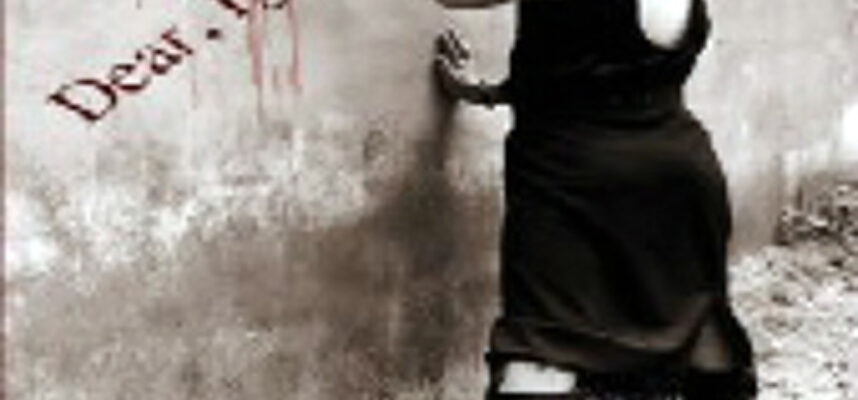
So, just as I said I might; I cleaned it up, edited it, reworded it and gave it a title: Dear Ignorance.
I think it’s interesting that without having a plan of action in mind, I still created something that had a definite theme. The key was to try to chisel at those words until the shape of what I was trying to say really came out. I still consider Dear Ignorance unfinished, but I like what I did with the original text. I metered it out into iambic heptameter…which is something I almost do without thinking these days. I still think it needs help with the flow. For instance I can read it straight through the right way but others may stumble on the rhythm…which unfortunately means my metering is a little off. What do you think?
Below you will find an exercise and an explanation of how fourteeners and iambic heptameter works in writing poetry. You will see three different versions of the same poem with the changes highlighted.
I want to preface this with the fact that I may have absolutely no idea what I’m talking about. Always do your own research. That’s why I supply hyperlinks!
Here’s an exercise in creating some traditional (European) forms of poetry. It started with me writing a quick, off-the-cuff poem on my Facebook page. Now, this poem was not meant to be blogged or advertised or anything. It was just something quick and dirty.
I wrote the poem in rhyming quatrains without really thinking about it. This is not unusual as I tend to automatically fall to quatrains a lot when I’m just writing. I suspect it comes from me writing a lot of lyrics, specifically rap lyrics, which I tend to think of in terms of quatrains (16 bars — 1 bar being a line — is 4 quatrains for me).
I found myself wanting to share something of the poetry writing process with my audience — such as it is. Especially those who ask me about my process. Well, this is not specifically my process, but it is a process that you can use.
So here’s the poem. I even recorded it, which you can hear in this post. The recording is the original, unedited version. I may re-record the final version.
The king in all his wisdom saw that something was amiss
The priest, forever pious, saw that something did not fit
And both saw a solution that they knew did not exist
Genocide of mind created so that they could get their wish

Well the king he knew the way he simply told them what to do
And they did it; he was pleased but felt that something was not true
Do they do it off his word or is it just what people do?
Are they slaves by birth or slaves because he wants it to be true?

To test the thought he gave some extra freedoms to one man
And saw the others did not like it, they couldn't comprehend
How one man ('cept the king of course) could be allowed to stand
Above the others, who was he that they should have to bend

They ridiculed him, cast him down and made of him a fool
The king was highly pleased at this and saw it as a tool
As long as scapegoats kept them riled they cared not that he ruled
Therefore, his rule was absolute; fair, unfair or cruel

The priest, he witnessed all of this and had a great idea
He saw that people were like sheep; in his mind it became clear
He would supplant the king and plant within them all a new idea
Once he had their minds and souls, their vision he would then make clear

For if they see what he believes (or at least what he claims to see)
They will see a promise greater than themselves, they will be free
"For you see, the king has made you slaves and I shall make you free.
But in order to be free you must believe and pay the fee.

And of course, that freedom is promised, when at last you lay to rest
Give money to the church and turn the cheek when you're beset.
So…technically, you're still a slave but when you die, you will be blessed!
So obey the king, but give to me...I mean give to God's request!"

The king in all his wisdom saw that something was amiss
The priest, forever pious, saw that something did not fit
And both saw a solution that they knew did not exist
Genocide of mind created so that they could get their wish
What is a Fourteener in Poetry Writing?
My first stanza contains three fourteeners. A fourteener is a 14 syllable line. Alone, you can consider a fourteener as a type of syllabic poetry — which is its own category of poetry types. You may have also noticed I used a repeating rhyme to introduce the king and then again to introduce the priest. You may also note I used the word “free” twice, back to back…like I said, this poem wasn’t for the mainstream.
A good chunk of this poem is already naturally written as a fourteener. This was not by design, it’s just how it came out. That’s how a lot of writing is, especially when employing any sort of rhythm. So, if you’re new to this, don’t beat yourself up trying to create a specific meter, just write and see what you get. You can make a better decision from there.
Let’s see if we can transform this poem into all fourteeners. In order to do this, we may have to change some lines up but still keep the overall meaning. Could be challenging. I’ll be right back with the results.
The king in all his wisdom saw that something was amiss
The priest, forever pious, saw that something did not fit
And both saw a solution that they knew did not exist
Create a genocide of minds so they could get their wish
The king he knew the way he simply told them what to do
They did it; he was pleased but felt that something was not true
Do they do it off his word? Is it just what people do?
Are they born slaves or slaves because he wants it to be true?
To test the thought he gave some extra freedoms to one man
The others did not like it, they just could not comprehend
How one man ('cept the king of course) could be allowed to stand
Above the others, who was he that they should have to bend
They ridiculed him, cast him down and made of him a fool
The king was highly pleased at this and saw it as a tool
As long as scapegoats kept them riled they cared not that he ruled
So his rule was absolute, whether fair, unfair or cruel
The priest, he witnessed all of this and had a great idea
He saw people were like sheep; in his mind it became clear
Supplant the king and plant within them all a new idea
Once he had their minds and souls, their vision he would make clear
If they can see what he believes (or what he claims to see)
They’ll see a promise greater than themselves, they will be free
"For you see, the king has made you slaves, I shall make you free.
In order to be free you must believe and pay the fee.Of course, that freedom is promised, when last you lay to rest
Give money to the church and turn the cheek when you're beset.
Technically, you're still a slave but when you die, you’ll be blessed!
Obey the king, but give to me! I mean, to God's request!"
The king in all his wisdom saw that something was amiss
The priest, forever pious, saw that something did not fit
And both saw a solution that they knew did not exist
Create a genocide of minds so they could get their wish
Okay, so now we got it formatted. Each line is 14 syllables long. You’ll notice that this made it flow smoother in some places, but made it really awkward in others. The reason for this is because I payed attention to syllable count but not meter.
Fourteener’s do no necessarily have to be written how I have it here. It’s possible to break the lines as long as they equal up to 14 syllables. In fact, most fourteener’s that I’ve seen are written in couplets and not quatrains like these.
They can also be broken further down, as long as they contain 7 feet and 14 syllables, which brings us to:
What is Iambic Heptameter in Poetry Writing?
So, we’re going to try to tighten this poem up further by attempting to restrict it to iambic heptameter. What was that you ask? What IS iambic heptameter?
Iambic heptameter is a meter expressed in 7 feet. A foot is a small measurement of meter, usually in syllables. For instance, an iamb is a two-syllable metrical foot. An iamb consists of an unstressed syllable followed by a stressed one or a short syllable followed by a long one. Think of it as “da-DUM” – that’s one iamb.
Heptameter is a word that means a meter of 7 iambs. So, 7 iambs gives ya 14 syllables…get it?
There are other types of feet as well, so you don’t have to stick to just iambs, you can mix and match em with others…as long as you know what you’re doing. Let’s get into some examples with this piece.
“The king in all his wisdom saw that something was amiss” – this line is perfect. It flows correctly in iambic heptameter. 14 syllables, 7 iambs – well, maybe not perfect. Depends on how you read it.
But this is how we want ALL of the lines to be.
Oh, one more thing. Did you notice the strikeout I put on the word “and” in the third line? It’s because that word does not have to be there to keep the meter straight. A space of time can be the same as a syllable. Understand?
So, let’s see if we can tame this poem into iambic heptameter.
No, I’m not going to go through this word for word. Instead, I’m going to read it out loud. Wherever I stumble or become unsure of how I should say it, is a place where the meter is screwed. You can also try to read it with a metronome, that can be a great help as well.
Something you should remember though – not all strict meter is always good. You don’t have to constrict your verse for the sake of meter. Many great poets break meter regularly to keep the flow tight. Or to make a specific sort of statement.
For instance, I was okay with how this poem originally sounded when I read it out loud…more or less. By tying it up with meter, I’m less satisfied. Meter can force you to sound almost robotic when it’s not mixed up a bit now and then. Also, a fourteener does NOT have to be in heptameter. They traditionally are, but it’s up to your own discretion.
The king in all his wisdom saw that something was amiss
The priest, forever pious, saw that something did not fit
And both saw a solution that they knew did not exist
Create a genocide of minds so they could get their wish

The king he knew the way he simply told them what to do
They did it, he was pleased but felt that something was not true
Do they just obey his words? Was it just what people do?
Are they born slaves or slaves because he wants it to be true?

To test the thought he gave some extra freedoms to one man
The others did not like it, they just could not comprehend
How one man ('cept the king of course) could be allowed to stand
Above the others, who was he that they should have to bend

They ridiculed him, cast him down and made of him a fool
The king was highly pleased at this and saw it as a tool
As long as scapegoats kept them riled they cared not that he ruled
So his rule was absolute, fair or foul, unfair or cruel

The priest, he witnessed all of this and had a great idea
The people were like unto sheep, his purpose became clear
Supplant the king and plant within them all a new idea
Once he owns their minds and souls, it’s their vision he’d make clear

If they can see what he believes (or what he claims to see)
They’ll see a promise greater than themselves, these devotees
"For you see, the king has made you slaves, I shall make you free.
In order to be free you must believe and pay the fee.

Of course that promised freedom, comes along with final rest
Give money to the church and turn the cheek when you're beset.
Technically, you're still a slave, when you die, you’ll all be blessed!
Obey the king, but give to me! I mean, to God's request!"

The king in all his wisdom saw that something was amiss
The priest, forever pious, saw that something did not fit
And both saw a solution that they knew did not exist
Create a genocide of minds so they could get their wish
Well, that’s that. Now, there’s a bunch of different things I could have done to mix it up and make it fresh. I could have broken the rules of meter, or I could have used something other than iambic heptameter. I could have used alternating 12 and 14 syllable couplets or something. There are an infinite amount of possibilities.
In fact, a more traditional way of breaking up a fourteener in iambic heptameter is to split it between two lines, typically 4 iambs on one and 3 on the other:
The king in all his wisdom saw That something was amiss
The priest forever pious saw That something did not fit
But that would have created an overly lengthy looking poem. However, if I were to take the next step in constricting this poem even further, I would go about breaking it down into this 4/3 iamb structure…but this post has gone on long enough.
Even as it is, I’m sure I didn’t fully accomplish what I was trying to do. The poem needs more work. Maybe somebody who studies these things will chime in and let me know where I erred. This was actually my first time — outside of writing a sonnet in high school — intentionally trying to dissect my verse to give it a specific meter.
I notice, the more practiced make it seem so fluid smooth
I’ll try to practice up until I too can do that too
For further application, you can use these poetic tools in writing other things as well. Apply them to lyrics if you’re looking for a specific sort of cadence — especially devastating when applied to head nodding beats. Use meter in your prose or fiction when you want to convey a specific feeling.
Meter doesn’t mean rhyme. Blank verse consists of unrhymed poetry written in a specific meter. You can use that sort of thing with any writing, not just poetry. Experiment with other forms of meter and different feet. I’ll do the same.
For more information on iambic heptameter and poetry writing:
Things I Have Loved – Frankie (@idowhatilike) – has a blog where pretty much every post is written in iambic heptameter. She hasn’t been around for some years now, but the words are still there.
communal iambic heptameter – forum thread I found with a communal iambic heptameter thing going. It’s probably the best for seeing how different people use it. Some of them are real witty.
I haven’t been writing poetry consistently for a good long while now, it’s hard to get back into that deliberate mindset
I haven’t tried to write poetry specifically for publication in years – it’s a different process…
I am using several different methods for trying to write these poems, some of which are very new to me
I’ve also been writing a bunch of haiku as well…but that’s something different 🙂
I’ve never really thought about the ocean before. I mean…not poetically. I don’t swim (can’t) and I never really spent a lot of time at the beach or on a boat. But I do appreciate the ocean as an entity. A giver and sustainer of life.
With that being said, I wanted to come from a unique angle and I’ve had a few ideas. For instance: I noticed that when I moved to PA, something was missing. I didn’t know what it was, but I realized when I took a trip back to my hometown (Amityville NY on Long Island) that what was missing, was the presence of the ocean. I never noticed nor payed attention to the vibe you get by being close to the ocean, after all, I was born and raised close to it. Nope, didn’t notice it…until it was no longer there to feel.
I think I found something to explore in that. I recorded some audio of me talking about the experience. I’m going to use that to craft a poem or two (that was one of the new methods I’m trying :).
I’ve also had a few other ideas and have already written a few poems that I’m letting incubate…and I’m actually kind of sad that I can’t share the work with you all 🙁 I want to, but many places consider online publication (even on a personal website) to be a relinquishing of first time rights (which is what most publications buy) and sometimes, electronic rights too.
But we can talk about the ocean! And if anybody would want to share some words here in the comments – or on facebook or twitter – on the subject, then feel free.


![ts_solarflare_free[1]](https://silenciobarnes.net/wp-content/uploads/2015/12/ts_solarflare_free1-220x160.jpg "ts_solarflare_free[1]")
4 Oct 2016
0 CommentsRealizing You Are a Poet
People often tell me they cannot write poetry. They say they do not know how. They say they do not think that way…whatever “that way” is. These people are wrong. If you think you cannot write poetry, here is proof you definitely can.
Poetry Is Not What You Think It Is
Poetry isn’t one thing. There’s a dictionary definition, of course, but that doesn’t encompass all of what poetry is.
The definition of poetry is also a prime candidate for subjective or personal interpretation. For example, my definition of poetry goes something like this:
Think about that for a second. Condensed language. Well, you speak in condensed language. You speak with verifiable sounds and rhythms.
You Speak in Poetry
Language itself is a condensed way of expressing larger ideas. So, one might say:
Or something like that. With speech, you condense incredibly complex ideas into nuanced constructions that are often highly open to interpretation. You speak with poetry.
Poetry accomplishes the same things as language in general. Maybe even more so. That’s because…
Poetry is Storytelling
All language is storytelling. When people write, talk, sign, or wave, they’re telling a story. Poetry is no different. There’s a narrative, even when there isn’t.
When you tell someone you’re running to the store real quick to pick up some condoms and cigars, you’re actually telling a story using poetic language. Because you ARE a poet. We all are. Or maybe we’re all poems. Who knows.
When did you realize you were a poet? If you never realized it before. I hope this helps you to reach that conclusion. Write something, poet.
More Random Thoughts by Silencio Barnes
More on Writing Poetry by Silencio Barnes
Share this:
Like this: